
-
E-mail:
hbjn1875@gmail.com -
Tel:
8617363170189
E-mail:
hbjn1875@gmail.comTel:
8617363170189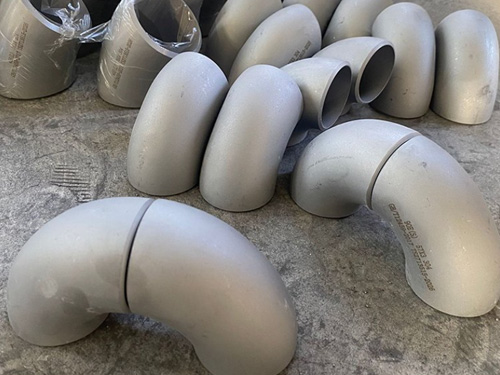
90 degree elbow is one of the most widely used curved pipe fittings in industrial fluid transportation piping systems. It serves to change the medium flow direction by 90 degrees, realizing vertical transition between horizontal and vertical pipe sections. Available in seamless and welded structures for butt-weld connection, the 90° elbow has two mainstream specifications: long radius (LR) and short radius (SR). Due to flexible layout adaptability, it is the fundamental component for constructing various complex pipe networks across numerous industries.
90 degree elbows are produced in compliance with international standards including ASME B36.10, ASME B36.19 and GB/T 12459. Multiple material grades can be customized to match different service conditions. Carbon steel 90 degree elbows of A234 WPB grade possess excellent cost performance, extensively applied in pipelines conveying water, steam, fuel oil and compressed air. Stainless steel models such as A403 WP304 and WP316L deliver superior corrosion resistance, suitable for food processing, pharmaceutical production, wastewater treatment and fine chemical pipelines transporting corrosive media. Alloy steel varieties including A234 WP11, WP22 and WP91 are developed for high-temperature, high-pressure working environments in thermal power plants, oil refineries and coal chemical projects. Long radius elbows are the preferred option for most process pipelines, while short radius elbows are selected when installation space is restricted.
Hot pushing and cold bending are the primary forming technologies for seamless 90 degree elbows. Pipe blanks are heated uniformly and extruded through dedicated molds to form smooth curved arcs. Large-diameter 90° elbows can be manufactured via steel plate rolling and welding processes. After forming, normalizing and tempering heat treatment is implemented to eliminate residual stress generated during plastic deformation and improve material toughness. Both ends are precisely machined with standard welding bevels to achieve full penetration butt welding with matching straight pipes. All finished elbows undergo rigorous quality inspection, covering dimensional tolerance testing, wall thickness inspection, surface visual check and ultrasonic non-destructive testing to detect potential defects including wall thinning, cracks and wrinkles on bending sections.
The core advantage of 90 degree elbow lies in its compact steering structure. It completes vertical direction transition within a small installation space, facilitating neat arrangement of pipelines on pipe racks and around equipment. Long radius 90° elbows feature gentle bending arcs, lower fluid turbulence and reduced pressure loss, minimizing medium scouring on pipe inner walls. Short radius elbows have smaller overall dimensions, which effectively solve layout difficulties in narrow equipment cabins and compact module piping.
Engineers need to consider relevant limitations during selection. Sharp turning will inevitably cause certain pressure drop and fluid disturbance. Therefore, short radius elbows are not recommended for pipelines carrying media containing solid particles to avoid severe local abrasion. In addition, bending sections bear concentrated hydraulic impact. Reasonable pipeline supports should be arranged nearby to share load and prevent excessive stress on welded joints.
90 degree elbows cover comprehensive industrial application scenarios. They are essential fittings for petrochemical process pipelines, natural gas transmission systems, power plant circulating water pipelines, municipal heating networks, water supply and drainage projects, environmental protection flue gas and wastewater piping. Stainless steel 90° elbows are widely adopted in biochemical and seawater desalination projects, whereas carbon steel products dominate general industrial and municipal infrastructure piping.
In pipeline layout design, 90 degree elbows are irreplaceable for turning arrangements. Designers can reasonably choose long radius or short radius types according to space conditions, flow requirements and medium characteristics. With complete specification series and mature forming technology, qualified 90 degree elbows provide reliable flow direction conversion solutions. As the most common directional pipe fitting, 90 degree elbow ensures stable, efficient and safe operation of fluid transportation systems worldwide.