
-
E-mail:
hbjn1875@gmail.com -
Tel:
8617363170189
E-mail:
hbjn1875@gmail.comTel:
8617363170189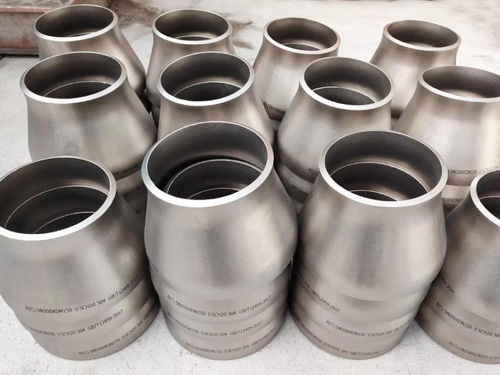
Reducing pipe,also commonly named pipe reducer,is a vital transition pipe fitting used to link pipelines with different nominal diameters in fluid delivery systems.It creates a gradual shift between different pipe sizes,stabilizes flow velocity of conveyed media and mitigates turbulence triggered by sudden diameter changes.Widely paired with elbows,tees,flanges and other piping components,reducing pipes are basic elements in industrial pipeline layout.According to structural configurations,they are mainly classified into concentric reducing pipes and eccentric reducing pipes,and engineers select suitable types based on pipeline layout,flow medium and field construction conditions.
Manufacturing of reducing pipes complies with internationally recognized standards including ASME B16.9 and GB/T 12459.Diverse material grades can be customized to fit various working conditions.Carbon steel reducing pipes with grade A234 WPB feature outstanding cost performance,extensively used for transporting water,steam,fuel oil and other non-corrosive media.Stainless steel reducing pipes in 304 and 316L possess superior anti-corrosion capability,ideal for food,pharmaceutical,purified water and chemical pipelines carrying corrosive substances.Alloy steel variants such as WP11,WP22 and WP91 are specially designed for high-temperature,high-pressure working environments in thermal power stations and petrochemical refineries.
Concentric reducing pipes adopt a symmetrical tapered structure,where the central axes of the large-diameter end and small-diameter end coincide.This style is the primary option for vertical pipelines and most common horizontal piping.Eccentric reducing pipes have offset central axes of two ends.When mounted flat on horizontal liquid pipelines,they effectively avoid air pocket accumulation inside the pipe,prevent vapor lock and guarantee continuous medium transportation.This characteristic makes eccentric reducing pipes essential for horizontal liquid transmission projects.
Major forming technologies contain hot pressing,cold spinning and plate rolling forming.Seamless reducing pipes are integrally pressed from complete pipe blanks without welding seams,removing hidden leakage hazards at welding joints.Welded reducing pipes are mostly adopted for large-diameter specifications.After forming,heat treatment procedures are conducted to eliminate internal residual stress and optimize metal internal structure.The two ends are machined into standard welding bevels to facilitate on-site butt welding connection.Every finished reducing pipe undergoes strict inspections,including dimensional tolerance measurement,visual surface check and non-destructive testing such as ultrasonic inspection to eliminate defects like cracks and laminations.
Well-manufactured reducing pipes bring prominent advantages to piping systems.The smooth tapered inner wall reduces fluid resistance and pressure loss during transportation,lowering energy consumption of pumps and conveying equipment.Slow diameter transition suppresses fierce turbulence,lessens pipeline vibration,flow noise and scouring erosion on pipe inner walls.Designers should reasonably choose concentric or eccentric structures according to medium properties.Improper selection may cause gas retention,flow fluctuation and affect stable system operation.
Reducing pipes are applied across a broad range of industrial sectors.They serve petrochemical facilities,natural gas gathering pipelines,thermal power equipment,municipal water supply and drainage networks,fire protection piping,wastewater treatment plants,food and biopharmaceutical factories.Stainless steel reducing pipes meet strict hygiene requirements for beverage and medicine production lines.Carbon steel reducing pipes occupy the market of infrastructure and conventional industrial piping.Alloy steel reducing pipes undertake the transportation of high-temperature steam and high-pressure process media in heavy industry.
As essential transition fittings,reducing pipes cannot be omitted in complete pipeline engineering.Appropriate material selection and structural matching greatly enhance the stability and service cycle of the whole piping network.With abundant specifications and standardized production processes,high-quality reducing pipes offer reliable diameter conversion solutions,supporting safe,steady and efficient operation of global fluid conveying systems.