
-
E-mail:
hbjn1875@gmail.com -
Tel:
8617363170189
E-mail:
hbjn1875@gmail.comTel:
8617363170189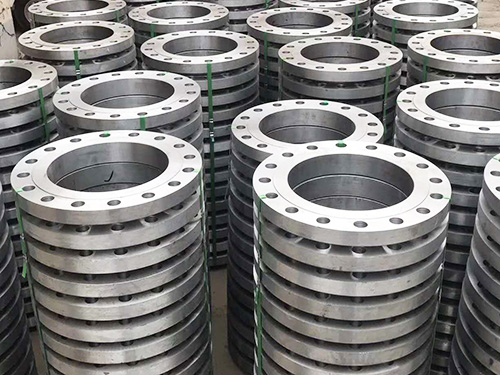
Pipe flange is a fundamental detachable connecting component widely applied in all kinds of industrial fluid transportation piping systems. It connects two pipe sections, links pipelines with valves, pumps, pressure vessels and other process equipment, and enables convenient assembly, disassembly, inspection and maintenance of piping networks. As a general term for a complete flange product family, pipe flange covers weld neck flange, slip on flange, blind flange, lap joint flange, socket weld flange, threaded flange, plate flange and other subtypes. Reasonable selection of pipe flanges is critical to guarantee the sealing integrity and long-term operational safety of the whole pipeline system.
Pipe flanges are manufactured in strict accordance with globally recognized industrial standards, mainly ASME B16.5, ASME B16.47 and GB/T 9113. Multiple material grades are available to adapt to diverse temperatures, pressure levels and conveyed media. Carbon steel pipe flanges represented by A105 enjoy excellent cost performance, widely used for pipelines transporting water, steam, fuel oil and compressed air. Stainless steel pipe flanges of F304 and F316L grades feature stable corrosion resistance, satisfying sanitary and anti-rust demands of food, pharmaceutical, seawater and chemical projects. Alloy steel pipe flanges such as A182 F11, F22 and F91 are specially developed to withstand extreme high-temperature and high-pressure service conditions in thermal power plants, oil refineries and coal chemical facilities. Standard pressure classes range from Class 150 to Class 2500. Multiple sealing face options including Raised Face (RF), Ring Type Joint (RTJ), Tongue and Groove (T&G) can be customized to meet different sealing requirements.
Hot forging serves as the mainstream forming process for most standard pipe flanges. Selected steel billets are heated to specified temperature and forged into integrated blanks. Large-diameter pipe flanges can also be produced by steel plate cutting or rolling and welding forming. After forming, necessary heat treatment processes including normalizing, tempering and stress relief annealing are carried out to eliminate residual processing stress and optimize internal metal microstructure. Subsequent precision machining covers sealing surface turning, inner hole processing and standard bolt hole drilling. All finished pipe flanges undergo comprehensive quality inspection, including dimensional tolerance measurement, hardness testing, surface visual examination and non-destructive testing, to eliminate potential defects such as cracks, laminations and inclusions.
The core advantages brought by pipe flange connection are prominent. The bolted assembly mode allows quick disconnection without cutting pipelines, greatly facilitating regular maintenance, pressure testing and equipment overhaul. Matched with appropriate gaskets, pipe flanges achieve reliable sealing and effectively prevent medium leakage. Diversified structural types provide flexible solutions for different working scenarios. Weld neck flanges are preferred for critical high-pressure pipelines; plate flanges and slip-on flanges are economical choices for low and medium-pressure auxiliary piping; blind flanges realize complete pipeline isolation for maintenance work.
Engineers should fully consider multiple factors during model selection. Operating pressure, working temperature, medium corrosivity, pipeline vibration intensity and installation space all determine the suitable flange type, material and sealing form. Improper selection may cause flange deformation, gasket failure and medium leakage. It should be noted that different flange subtypes have inherent limitations. For instance, socket weld and threaded flanges are mostly limited to small-bore pipelines, while plate flanges are not recommended for systems with severe vibration and frequent temperature fluctuations.
Pipe flanges cover nearly all industrial and municipal fields. They are essential components in petrochemical engineering, natural gas transmission, thermal power generation, urban water supply and drainage, heating networks, fire protection systems, environmental protection waste gas and wastewater treatment, food processing and biopharmaceutical production lines. Different material combinations and structural designs can match working conditions from normal temperature low pressure to ultra-high temperature and high pressure.
In complete pipeline engineering design and procurement, pipe flanges are irreplaceable basic connecting fittings. Proper specification matching and standardized installation significantly reduce hidden leakage risks and extend the service cycle of fluid conveying systems. With complete specification series and mature mass-production technology, high-quality pipe flanges provide diversified, reliable bolted connection solutions, supporting safe, continuous and efficient operation of fluid transportation infrastructure across global industries.