
-
E-mail:
hbjn1875@gmail.com -
Tel:
8617363170189
E-mail:
hbjn1875@gmail.comTel:
8617363170189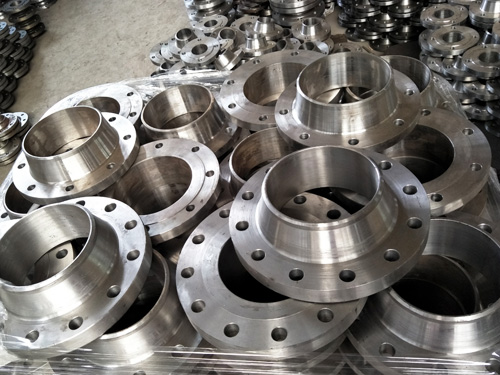
Alloy steel flange is a high-strength forged connection component specially designed for severe high-temperature and high-pressure industrial piping systems. This product category covers weld neck flange, slip on flange, blind flange and other types of flanges. By adding alloy elements such as chromium, molybdenum and vanadium into steel, alloy steel flanges achieve stable mechanical properties under extreme operating environments, which cannot be matched by ordinary carbon steel and conventional stainless steel flanges. They serve as core connecting fittings for critical process pipelines in thermal power, petrochemical and coal chemical industries.
Alloy steel flanges are produced in strict compliance with global authoritative standards including ASME B16.5, ASME B16.47, ASTM A182 and GB/T 9113. A series of mature material grades are available for different service conditions. A182 F11 and F182 F12 belong to low alloy heat-resistant steel, suitable for moderate high-temperature steam pipelines. A182 F22 is widely adopted in high-temperature medium transmission systems of refineries. A182 F91, a martensitic alloy steel material, features excellent high-temperature creep resistance and can withstand long-term operation under ultra-high temperature and pressure. Pressure classes cover Class 150 up to Class 2500. Raised face (RF) is commonly used for general working conditions, while Ring Type Joint (RTJ) sealing surface is selected for high-pressure critical service pipelines.
Precision hot forging is the primary forming process for alloy steel flanges. Alloy steel billets are heated to controlled temperature and forged into integrated blanks. Follow-up machining procedures include sealing surface processing, bolt hole drilling and welding end fabrication. Normalizing and tempering heat treatment is an indispensable procedure. It effectively eliminates residual forging stress, refines metal grain structure, and improves tensile strength, impact toughness and creep resistance. All finished alloy steel flanges undergo comprehensive quality inspection, including dimension measurement, hardness test, metallographic examination and non-destructive testing to detect internal microcracks, segregation and other hidden defects.
The most prominent advantage of alloy steel flanges lies in outstanding high-temperature performance. Under sustained high-temperature and high-pressure loads, carbon steel is prone to creep deformation and structural failure. Alloy elements significantly enhance material oxidation resistance and structural stability, avoiding permanent deformation under long-term thermal load. Alloy steel flanges have strong resistance to thermal fatigue and can adapt to pipelines with frequent temperature fluctuations. However, users need to recognize its limitations. Alloy steel has weak resistance against chloride ion corrosion, so it is not suitable for pipelines transporting saltwater or strongly corrosive media without anti-corrosion protection. Moreover, strict welding specifications are required during installation. Appropriate preheating and post-weld heat treatment must be implemented to prevent welding cold cracks.
Alloy steel flanges have clear targeted application scenarios. They are extensively used in thermal power boiler pipelines, superheated steam delivery systems, petrochemical hydrogenation devices, crude oil refining high-temperature process pipelines and coal chemical high-pressure medium circulation equipment. These critical production facilities put forward strict requirements on the long-term reliability of pipeline connections, making alloy steel flanges irreplaceable.
In engineering design, engineers need to select material grades and flange types according to actual temperature, pressure and medium parameters. For low and medium-pressure pipelines working under normal temperature, carbon steel flanges can control costs. But for high-temperature heavy-load main pipelines, alloy steel flanges are the only reliable option. Although raw material and processing costs are relatively higher, they greatly reduce risks of equipment shutdown caused by pipeline joint failure.
With complete specification range and mature forging and heat treatment technology, qualified alloy steel flanges provide safe connection solutions for heavy industrial critical piping. As an indispensable high-end flange product, alloy steel flange guarantees continuous, stable and secure operation of high-temperature and high-pressure fluid transportation infrastructure in global heavy industry.