
-
E-mail:
hbjn1875@gmail.com -
Tel:
8617363170189
E-mail:
hbjn1875@gmail.comTel:
8617363170189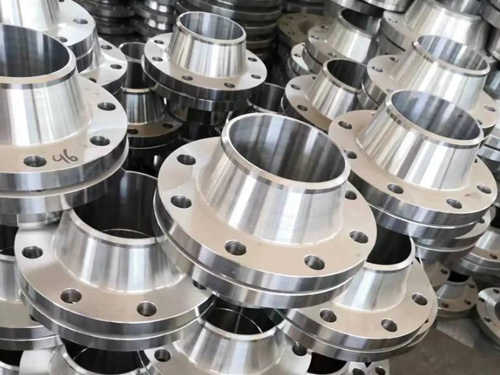
Stainless steel flange is a high-performance bolted connection fitting extensively used in piping systems with strict anti-corrosion and sanitary requirements. It covers a complete product series including weld neck flange, slip on flange, blind flange, lap joint flange, socket weld flange and plate flange. Different from carbon steel flanges that require additional anti-rust coating, stainless steel materials naturally form a dense chromium oxide passive film on the surface. This inherent anti-corrosion characteristic makes stainless steel flanges irreplaceable in chemical, food, pharmaceutical and seawater service pipelines all over the world.
Stainless steel flanges are manufactured strictly in accordance with international standards such as ASME B16.5, ASME B16.47, ASTM A182 and GB/T 9113. A variety of material grades can be selected to match diverse working conditions. F304 stainless steel flange is the most widely used grade with balanced corrosion resistance and cost efficiency, suitable for weak corrosive environments and regular hygienic pipelines. F316L stainless steel flange contains molybdenum element, delivering excellent resistance to chloride ion erosion, adapting to brine, seawater and organic chemical media. Other optional materials include F321 for anti-intergranular corrosion under high temperature, F310S for ultra-high temperature service and duplex stainless steel flanges for harsh marine corrosive environments. Pressure classes range from Class 150 to Class 2500, with multiple sealing face options including RF, RTJ and TG to meet different sealing demands.
Hot forging is the mainstream forming technology for stainless steel flanges. Qualified stainless steel billets are heated to specified temperature and forged into integrated blanks. Plate-type stainless steel flanges can also be processed directly from stainless steel plates. After forming, solution heat treatment is essential to eliminate forging stress, restore the passive film structure and improve material toughness. Subsequent precision machining includes sealing surface turning, bolt hole drilling and welding end processing. All finished stainless steel flanges go through rigorous inspection: dimensional tolerance check, surface visual inspection, hardness testing and non-destructive testing to eliminate internal defects such as cracks and inclusions. Pickling and passivation treatment is normally carried out as final surface processing to optimize anti-corrosion performance.
Stainless steel flanges possess outstanding comprehensive advantages. The self-repairing passive film effectively prevents rust and chemical medium erosion, greatly extending service life and cutting regular anti-corrosion maintenance costs. The smooth metal surface avoids medium adhesion and residue accumulation, preventing secondary contamination, which satisfies strict sanitation standards. Stainless steel maintains stable mechanical performance within a wide temperature range, adaptable to low-temperature cryogenic pipelines as well as medium-high temperature process systems. One important construction reminder: improper high-temperature welding will damage the passive film. Operators should adopt standardized welding procedures, and supplementary pickling passivation after welding is strongly recommended.
Despite superior performance, stainless steel flanges have certain limitations. Raw material and processing costs are significantly higher than carbon steel flanges. Besides, stainless steel is prone to crevice corrosion and pitting corrosion when staying in high-chloride environments for a long time without proper sealing design.
Stainless steel flanges are applied in numerous high-standard industrial fields. They are essential components for food processing, beverage production, biopharmaceutical workshops, purified water systems and brewing facilities. Meanwhile, they are widely used in seawater desalination, wastewater treatment, fine chemical engineering, marine piping and environmental protection equipment. Different flange types are reasonably allocated according to working conditions: weld neck flanges for critical high-pressure pipelines, plate flanges and slip on flanges for low and medium-pressure auxiliary pipelines, and blind flanges for pipeline isolation and sealing.
In engineering procurement, buyers need to confirm flange type, material grade, pressure class and sealing surface form based on medium composition, temperature and pressure. For projects focusing on hygiene and corrosion resistance, stainless steel flanges are a long-term reliable investment choice. With complete specifications and mature standardized production processes, premium stainless steel flanges provide stable, leak-proof connection solutions, supporting continuous and safe operation of high-standard fluid transportation systems worldwide.