
-
E-mail:
hbjn1875@gmail.com -
Tel:
8617363170189
E-mail:
hbjn1875@gmail.comTel:
8617363170189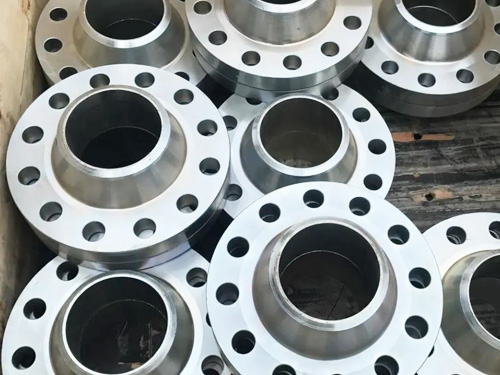
Socket weld flange is a common small-bore pipe connecting component extensively adopted for low and medium-pressure industrial piping systems.Distinguished from weld neck flange and slip on flange,it is designed with a concave socket cavity.Pipe ends are inserted into the socket before being fixed by fillet welding on the upper side.This special structural design simplifies installation for small-size pipelines.Socket weld flanges are favored in compact equipment layouts and widely used for auxiliary pipelines,instrument piping and hydraulic circulation systems across various industries.
Socket weld flanges are manufactured in accordance with international standards including ASME B16.5 and GB/T 9113.Multiple material grades are available to satisfy diverse operating environments.A105 carbon steel socket weld flanges feature favorable cost performance,suitable for transporting water,steam,compressed air and fuel oil.Stainless steel socket weld flanges of F304 and F316L grades deliver excellent anti-corrosion capacity,applied in food,pharmaceutical and fine chemical pipelines carrying weakly corrosive media.Alloy steel types such as A182 F11 and F22 can be customized to adapt to moderate high-temperature working conditions.Standard pressure classes range from Class 150 to Class 600.The raised face(RF)sealing surface is the mainstream option for general working conditions.
Hot forging serves as the core forming technology for socket weld flanges.Steel blanks are heated and forged into integrated blanks with reserved socket structure.Follow-up precision machining includes socket inner surface processing,sealing face turning and bolt hole drilling.Normalizing and tempering heat treatment is implemented after forging to eliminate residual internal stress and optimize metal microstructure.All finished goods pass comprehensive quality control,including dimension verification,hardness testing,surface visual inspection and non-destructive examination,to eliminate potential defects such as surface cracks and material laminations.
The biggest advantage of socket weld flange lies in convenient installation for small nominal diameter pipelines.There is no need to machine welding bevels on pipe ends.Workers only insert the pipe into the socket and complete single-sided fillet welding,greatly lowering construction difficulty and shortening working hours.The socket structure provides good lateral support for pipes,improving the stability of pipeline joints under slight vibration.In addition,the compact outline fits limited installation space,which makes it ideal for instrument connection and equipment accessory pipelines where space is constrained.
Nevertheless,obvious limitations restrict its application scope.A tiny gap inevitably exists between the outer wall of the inserted pipe and the inner wall of the socket.When conveying fluid containing chloride ions or corrosive substances,medium may accumulate inside the clearance and trigger crevice corrosion over long-term operation.Besides,the fillet welded joint cannot achieve full penetration,resulting in weaker overall connection strength compared with butt-welded fittings.For this reason,socket weld flanges are generally only recommended for pipes below DN50.They are not suitable for high pressure,high temperature,severely vibrating pipelines and systems transporting flammable,toxic media.
Socket weld flanges have clear targeted application scenarios.They are widely used for instrument piping,hydraulic pipelines,small-bore fire protection pipelines and auxiliary process pipelines in petrochemical plants,power stations,machinery manufacturing factories.Stainless steel socket weld flanges are commonly seen in laboratory pipelines and purified water equipment.Carbon steel socket weld flanges occupy the market of conventional small-caliber auxiliary piping in infrastructure projects.
In engineering design,pipeline engineers need to comprehensively judge parameters including pipe diameter,pressure rating,medium property and temperature to select proper flange types.For small-bore,low-to-medium pressure pipelines without severe corrosion risks,socket weld flanges offer an economical and convenient connection scheme.
With abundant specifications and stable forging technology,qualified socket weld flanges provide practical connection solutions for compact piping layouts.As an important supplementary flange category,socket weld flanges support reliable and efficient operation of auxiliary fluid conveying systems in global industrial facilities.