
-
E-mail:
hbjn1875@gmail.com -
Tel:
8617363170189
E-mail:
hbjn1875@gmail.comTel:
8617363170189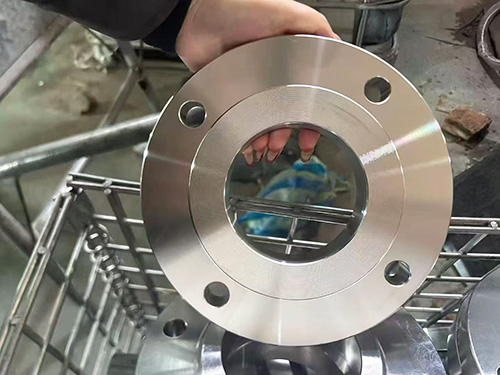
Slip on flange is a popular type of pipe connecting flange widely used for low and medium-pressure industrial piping systems. Different from weld neck flange connected by butt welding, the slip on flange features a short hub structure. Pipes penetrate through the inner bore of the flange, and connections are completed by fillet welding on both inner and outer sides of the flange face. Thanks to convenient installation and economical manufacturing cost, slip on flanges are widely selected for general engineering projects, occupying a large market share in conventional fluid transportation pipelines.
Slip on flanges are produced in accordance with mainstream international standards including ASME B16.5, ASME B16.47 and GB/T 9113. Rich material options are available to meet varied working environments. A105 carbon steel slip on flanges enjoy excellent cost performance, extensively used for water, steam, compressed air and fuel delivery pipelines. Stainless steel slip on flanges of F304 and F316L grades own stable anti-corrosion performance, suitable for food, pharmaceutical and chemical pipelines carrying weak corrosive media. Alloy steel slip on flanges such as A182 F11 and F22 can be customized for moderate high-temperature working conditions upon clients’ technical demands. Multiple pressure classes ranging from Class 150 to Class 600 are available. Raised face (RF) is the most common sealing surface form for slip on flanges.
The main forming technology of slip on flanges is hot forging. Steel billets are heated and forged into integrated flange blanks. Subsequent precision machining processes include turning sealing surface, machining inner hole and drilling bolt holes. Heat treatment is implemented after forging to remove internal forging stress and improve metal mechanical properties. All finished products go through systematic quality control, including dimension inspection, hardness test, visual examination and non-destructive testing, to rule out surface cracks and internal metallurgical defects.
The biggest advantage of slip on flange lies in simple assembly operation. During construction, workers only need to slide the flange onto the pipe end before conducting fillet welding. Complex pipe end bevel processing required for butt welding is unnecessary, greatly shortening on-site construction period and lowering technical requirements for welders. Moreover, its simple forging structure reduces raw material consumption and processing difficulty, resulting in a more competitive price compared with weld neck flanges.
Nevertheless, users must be aware of its inherent limitations. The fillet welded joint cannot achieve full penetration welding. Stress concentration easily occurs at the welding position under long-term pressure, vibration and temperature variation. Therefore, slip on flanges are not suitable for ultra-high pressure, high-temperature pipelines and pipelines transporting flammable, explosive and toxic hazardous media. In addition, compared with weld neck flanges, slip on flanges have weaker overall rigidity, so regular inspection of welding joints is suggested for long-running systems.
Slip on flanges have clear applicable scenarios in pipeline design. They are ideal for municipal water supply and drainage systems, building heating pipelines, fire protection piping, general factory compressed air circulation and light chemical equipment pipelines. Stainless steel slip on flanges are widely adopted in purified water circulation and beverage production lines. Carbon steel slip on flanges are the mainstream choice for infrastructure and conventional industrial facilities.
In engineering procurement, designers need to evaluate working pressure, medium characteristics and operating temperature to make proper selection between slip on flanges and weld neck flanges. For low-to-medium pressure, stable working conditions without severe vibration, slip on flanges deliver an economical and effective connection scheme. With complete specifications and mature manufacturing techniques, qualified slip on flanges offer reliable flange connection solutions. As a cost-effective basic pipeline fitting, it supports safe and efficient operation of general fluid conveying systems worldwide.