
-
E-mail:
hbjn1875@gmail.com -
Tel:
8617363170189
E-mail:
hbjn1875@gmail.comTel:
8617363170189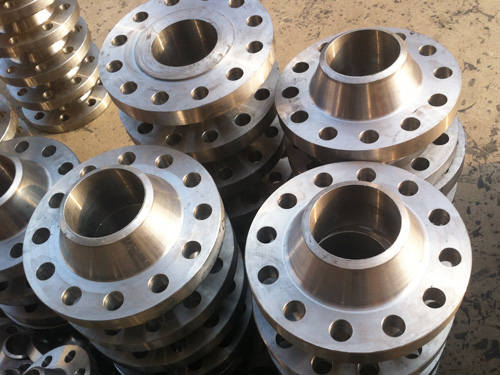
Weld neck flange is one of the most reliable and widely adopted flange types in high-pressure, high-temperature industrial piping systems. Characterized by an elongated tapered neck that gradually transitions to match the pipe wall thickness, this flange is permanently connected to pipelines via full penetration butt welding. The unique structural design effectively disperses mechanical stress generated inside the piping network, greatly improving connection stability. Owing to superior load-bearing performance, weld neck flanges are prioritized for critical process pipelines, distinguishing them from slip-on flanges, threaded flanges and other low and medium-pressure flange products.
Weld neck flanges are manufactured following globally recognized specifications, including ASME B16.5, ASME B16.47 and GB/T 9113. Diverse material grades can be customized to cope with different working media and operating conditions. Carbon steel weld neck flanges in A105 grade deliver excellent cost efficiency, commonly used for steam, water, fuel oil and compressed air pipelines. Stainless steel variants such as F304 and F316L possess outstanding corrosion resistance, suitable for pharmaceutical, food and chemical pipelines conveying corrosive fluids. Alloy steel grades like A182 F11, F22 and F91 are engineered for extreme high-temperature and high-pressure service in thermal power plants and petrochemical hydrogenation units. Multiple pressure classes ranging from Class 150 up to Class 2500 are available to satisfy different pressure rating requirements.
The production workflow of weld neck flanges adopts precision forging as the core forming process. Raw steel ingots or steel billets are heated to specified temperature, then forged into integrated blanks. Subsequent machining procedures include turning the sealing face, drilling bolt holes and processing butt welding bevels. Heat treatment such as normalizing and tempering is carried out to eliminate forging stress and optimize internal metal grain structure. Before delivery, each flange undergoes strict quality inspection, covering dimensional verification, hardness testing, chemical composition analysis and non-destructive examination. These inspections detect internal defects such as cracks and inclusions to guarantee long-term safe operation.
The tapered neck is the core competitive advantage of weld neck flanges. Stress can be evenly transferred from the flange plate to the connected pipe through smooth thickness transition, avoiding stress concentration at joints. Full penetration butt welding achieves consistent strength between the flange and pipe body, resisting pipeline vibration, thermal expansion and external impact. A variety of sealing face options are supplied, including raised face (RF), ring type joint (RTJ) and tongue and groove (T&G). The RTJ sealing design performs exceptionally well under ultra-high pressure and high temperature, effectively preventing medium leakage.
Despite prominent performance strengths, weld neck flanges have certain limitations. Complex forging and machining processes lead to higher manufacturing costs compared with slip-on flanges. Professional welding operators are required during installation, and full welding inspection is generally compulsory for important projects to ensure welding quality.
Weld neck flanges are extensively applied in demanding industrial scenarios. They serve thermal power stations, oil refineries, natural gas transmission trunk lines, coal chemical projects, marine engineering and cryogenic storage equipment. Where pipelines bear frequent temperature fluctuations, heavy pressure loads and hazardous medium transportation, weld neck flanges become the preferred connecting solution.
In industrial pipeline engineering selection, weld neck flanges represent a high-standard, leak-proof connection option for critical piping. When matched with proper gaskets, bolts and standardized welding processes, they minimize leakage risks and extend the service cycle of the whole system. With complete specifications and rigorous production standards, high-quality weld neck flanges provide dependable flange connection solutions, supporting secure and continuous operation of fluid transportation infrastructure across global heavy industries.