
-
E-mail:
hbjn1875@gmail.com -
Tel:
8617363170189
E-mail:
hbjn1875@gmail.comTel:
8617363170189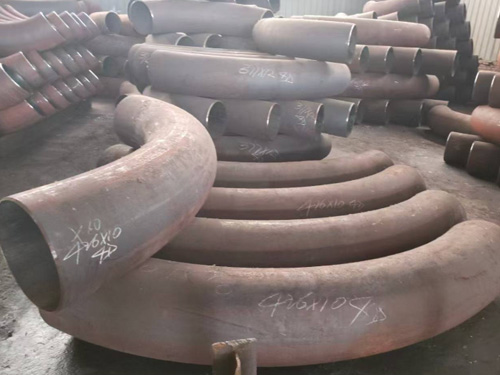
A welded bend is a common pipe fitting formed by cutting, matching and welding pipe segments to create a curved pipeline transition. Unlike integrally formed seamless induction bends shaped by hot bending or cold bending, welded bends rely on welding technology to assemble separate pipe sections into a curved shape. Manufacturers can produce various angles and radii flexibly without complicated hot bending equipment. Due to convenient processing and low production costs, welded bends are extensively adopted in medium and low-pressure piping systems, and they remain a cost-effective choice for large-diameter pipeline construction.
The fabrication procedure of welded bends consists of several key steps. Straight steel pipes are cut into required segments with beveled ends for full penetration welding. Multiple pipe sections are spliced together to form the target bending arc. Generally, more segments will generate a smoother curve and reduce fluid resistance. After positioning and fixing, operators complete circumferential welding on each joint. Subsequent processes include weld grinding, flaw detection, rust removal and anti-corrosion coating. Carbon steel, stainless steel and alloy steel can be used as raw materials. For special working conditions, post-weld heat treatment may be carried out to release welding stress and improve the toughness of welding joints.
Welded bends have prominent advantages as well as inherent limitations. On the positive side, they support customized large-diameter and special-radius specifications that are difficult to achieve through integral bending. The production cycle is short, and the overall manufacturing cost is much lower than seamless formed bends. Nevertheless, welding seams are the natural weak points of welded bends. Under long-term high pressure, temperature alternation, vibration or corrosive medium, weld areas are prone to fatigue cracks, corrosion and leakage. Moreover, uneven inner weld reinforcement may increase fluid turbulence and pressure loss. Therefore, welded bends are usually not recommended for high-temperature, high-pressure pipelines transporting flammable, explosive or toxic media.
Strict quality control is essential during production. Common inspection methods include visual inspection, ultrasonic testing and radiographic testing to detect welding defects such as porosity, incomplete penetration and cracks. Welded bends follow international piping standards and are widely used in ventilation ducts, dust removal pipelines, municipal water delivery, general industrial circulating water and low-pressure gas transmission projects.
In summary, welded bend is an economical assembled pipe fitting for general industrial piping. Its flexible customization and competitive price make it popular in low and medium-pressure engineering. However, users must evaluate working pressure, medium property and service environment before selection. When properly applied and regularly maintained, welded bends can satisfy long-term stable operation requirements and deliver good economic benefits for pipeline projects.