
-
E-mail:
hbjn1875@gmail.com -
Tel:
8617363170189
E-mail:
hbjn1875@gmail.comTel:
8617363170189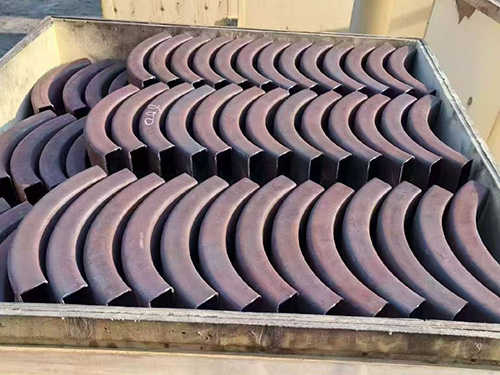
A pipe bend is one of the most fundamental and essential components in industrial piping systems.It is specially designed to change the direction of fluid flow in pipelines,allowing smooth transition between straight pipe sections.Unlike ordinary pipe elbows,pipe bends feature a longer radius,continuous curved surface and integral forming structure,which significantly improve the overall performance and stability of fluid transmission.Widely used in petroleum,chemical engineering,power generation,water supply and industrial transportation systems,pipe bends play an irreplaceable role in modern infrastructure construction.
Pipe bends are manufactured through mature and standardized forming technologies,mainly including hot induction bending,cold bending and rolling forming.Among these methods,hot induction bending is the most widely adopted process for high-standard industrial projects.During production,the local pipe area is rapidly heated to plastic state by high-frequency electromagnetic induction.The pipe is then pushed and bent at a constant speed to obtain a smooth and uniform arc.After forming,heat treatment is carried out to eliminate internal stress,refine metal structure and improve mechanical properties.This advanced manufacturing process ensures consistent wall thickness,low ovality and no surface defects,making the bend suitable for high-pressure and high-temperature working conditions.
Pipe bends possess many obvious advantages compared with traditional elbows.First,their long-radius curved design effectively reduces fluid resistance and turbulence inside the pipeline.This greatly lowers pressure loss,improves transmission efficiency and reduces long-term energy consumption.Second,the integral seamless structure avoids welding weakness points,enhancing the bending strength,compression resistance and corrosion resistance of the pipe fitting.It can withstand complex working environments such as high pressure,strong vibration and corrosive media,extending the service life of the entire pipeline system.In addition,pipe bends feature high dimensional accuracy,good sealing performance and stable structural safety during long-term operation.
Various types of materials can be used to produce pipe bends,including carbon steel,alloy steel and stainless steel.Different materials enable pipe bends to adapt to diverse industrial scenarios,such as high-temperature steam delivery,oil and gas long-distance transportation,chemical fluid transmission and municipal water supply projects.Common specifications include 3D,5D and 7D bending radii with customizable bending angles.This flexible design allows pipe bends to meet the requirements of different engineering layouts and space conditions.
In conclusion,pipe bends are vital pipeline components with excellent mechanical performance and stable fluid transportation characteristics.With reliable quality,high safety and strong adaptability,they effectively solve the defects of traditional pipe fittings and ensure the efficient,stable and safe operation of various industrial pipeline systems.As basic industrial accessories,pipe bends will continue to maintain important application value in future industrial construction and pipeline engineering development.