
-
E-mail:
hbjn1875@gmail.com -
Tel:
8617363170189
E-mail:
hbjn1875@gmail.comTel:
8617363170189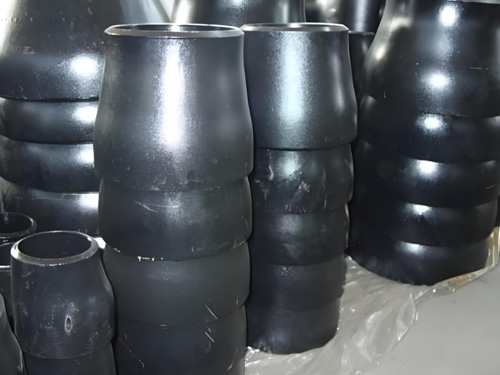
Carbon steel reducer is a widely used butt-welded transition pipe fitting for connecting pipelines with different nominal diameters. Available in concentric and eccentric types, it realizes smooth pipe diameter transition in fluid transportation systems. As a cost-effective basic fitting, carbon steel reducer occupies a dominant position in conventional industrial and municipal pipeline projects. Compared with stainless steel and alloy steel reducers, it balances reliable mechanical performance and competitive pricing, making it the first choice for numerous general engineering piping layouts.
Carbon steel reducers are manufactured in accordance with international standards including ASME B16.9 and GB/T 12459. The most common material grade is A234 WPB, which features stable tensile strength, excellent plasticity and outstanding weldability. It can satisfy medium-temperature and medium-pressure working conditions for most non-corrosive media. Other optional carbon steel grades can be customized upon special technical requirements. Two structural types are supplied: concentric carbon steel reducers and eccentric carbon steel reducers. Concentric models are suitable for vertical pipelines and horizontal gas pipelines. Eccentric carbon steel reducers are mainly deployed on horizontal liquid pipelines to eliminate air pockets and prevent vapor lock inside the piping.
Major forming processes include hot pressing, cold spinning and plate rolling. Small and medium-size carbon steel reducers are integrally pressed from seamless pipe blanks without welding seams, which minimizes potential leakage risks. Large-diameter specifications are usually produced by steel plate rolling and longitudinal welding. After forming, normalized heat treatment is carried out to remove residual internal stress generated during processing and refine metal grain structure. Both ends are precisely machined with standard welding bevels to achieve full penetration butt welding with matching carbon steel pipes. Strict quality control covers dimensional tolerance inspection, visual surface check and non-destructive testing such as ultrasonic examination to detect laminations, cracks and other internal defects.
Carbon steel reducers have distinctive strengths and characteristics. Their prominent advantage lies in superior cost performance, which effectively controls the overall investment of pipeline engineering. Carbon steel materials are easy to cut, bend and weld, bringing great convenience to field construction. The smooth tapered inner surface reduces fluid turbulence and pressure loss during medium transmission. However, carbon steel is susceptible to oxidation and rust when exposed to humid environments or untreated media. Therefore, surface anti-corrosion treatment is essential before delivery. Common treatments include anti-rust oil coating, black varnish painting, hot-dip galvanizing and epoxy coating, selected based on actual service environments and customer demands.
Carbon steel reducers serve a wide range of application scenarios. They are extensively adopted in urban water supply and drainage networks, central heating pipelines, fire protection systems, compressed air piping, crude oil and fuel transportation, thermal power auxiliary pipelines and general chemical factories. They are applicable for conveying water, steam, air, fuel oil and other weakly corrosive or neutral media. Nevertheless, carbon steel reducers are not suitable for long-term transportation of strong acid, strong alkali and high-chloride media unless internal anti-corrosion lining is added.
In engineering procurement, buyers need to confirm key parameters including concentric or eccentric style, nominal diameter, wall thickness schedule, material grade and surface anti-corrosion requirements. Proper type selection directly affects the stability of the whole pipeline system. As a mature and economical transition fitting, carbon steel reducer meets the basic diameter conversion demands of massive infrastructure and industrial projects. With complete specifications and stable product quality, qualified carbon steel reducers deliver durable and economical piping solutions, supporting safe and continuous operation of fluid conveying systems across global industries.