
-
E-mail:
hbjn1875@gmail.com -
Tel:
8617363170189
E-mail:
hbjn1875@gmail.comTel:
8617363170189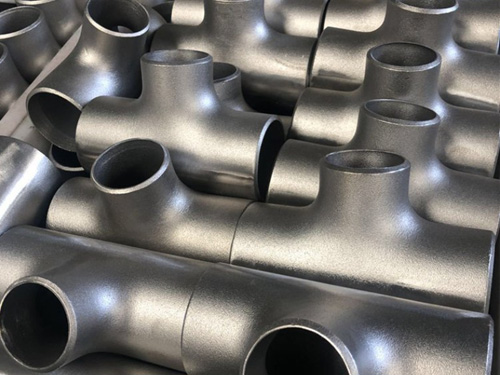
Stainless steel tee is a vital three-way pipe fitting designed to split, converge and divert fluid inside industrial piping systems. It establishes three-direction pipeline connections and is widely favored in projects with strict anti-corrosion and sanitation requirements. Classified by manufacturing craft, stainless steel tees consist of seamless stainless steel tees and butt weld stainless steel tees. Different from carbon steel tees that rely on extra anti-corrosion coating, stainless steel tees own inherent rust-resistant properties, making them indispensable fittings for medium carrying corrosive substances, pure liquid and hygienic media.
A variety of stainless steel grades are available for selection to match diverse working conditions. The most prevalent materials are 304 and 316L stainless steel. Grade 304 stainless steel tee offers good general corrosion resistance and cost competitiveness, suitable for regular weak corrosive environments. 316L stainless steel tee contains molybdenum element, delivering superior resistance against chloride ion erosion, which performs steadily in saltwater, chemical solvent and marine environments. Other optional materials include 321, 310S and duplex stainless steel for high-temperature or harsh corrosive working scenarios. All products are manufactured in accordance with international standards including ASME B16.9, ASTM A403 and GB/T 12459. Similar to other tees, stainless steel tees fall into equal tee and reducing tee categories. Equal tees have identical diameters for main pipe and branch pipe for uniform flow distribution, while reducing tees achieve flow diversion and pipe diameter transition simultaneously to meet complex pipeline layout demands.
Common forming technologies include hot extrusion, cold bulging and precision hot forming. Seamless stainless steel tees are integrally molded from whole pipe blanks without welding joints, avoiding hidden leakage risks. Butt weld stainless steel tees are processed with standardized welding bevels for on-site butt welding connection. After forming, solution heat treatment will be conducted to eliminate internal processing stress, restore the passive film structure of stainless steel and optimize mechanical performance. Each finished stainless steel tee undergoes strict inspections, including dimensional verification, visual surface check and non-destructive testing such as ultrasonic examination to detect tiny cracks and internal defects.
The core competitive advantage of stainless steel tee lies in outstanding corrosion resistance. The chromium component inside stainless steel can form a dense protective passive film on the metal surface to prevent oxidation and medium erosion. The smooth inner wall reduces fluid resistance, avoids medium adhesion and residue, and prevents secondary contamination. Stainless steel materials withstand a wide temperature range and maintain stable mechanical properties under low temperature and moderate high-temperature conditions. Besides, stainless steel tees feature clean surface, easy cleaning and maintenance. One reminder during application: proper welding techniques are required to avoid overheating which may damage the anti-corrosion layer. Pickling and passivation treatment after welding is suggested to recover surface corrosion resistance.
Stainless steel tees cover extensive high-standard application fields. They are commonly adopted in food processing, beverage manufacturing, pharmaceutical production, purified water systems and brewery projects where hygiene standards are strictly enforced. In chemical plants, seawater desalination equipment, marine piping and environmental wastewater treatment facilities, stainless steel tees handle corrosive chemical media reliably. They are also widely used in petrochemical fine processing, biopharmaceutical engineering and precision instrument circulation pipelines.
As a high-performance pipe fitting, stainless steel tee balances corrosion resistance, hygienic property and long service life. Although its procurement cost is higher than carbon steel fittings, it greatly lowers later maintenance, replacement and anti-corrosion treatment expenses. For engineering projects pursuing long-term stable operation and medium purity, stainless steel tee has become a preferred piping component, providing safe and durable three-way connection solutions for global industrial fluid transportation systems.